Imaging Lenses · Telecentric Series
Telecentric Lenses for Precision Machine Vision Measurement
Telecentric lenses with constant magnification and low distortion for machine vision measurement and wafer inspection. Get a quote from Wavelength Optics USA.
Magnification range
Working distance
Distortion
Camera connection
Full catalogue
0 matching parts
| Part Number▲ | F/#▲ | Magnification▲ | Format▲ | Mount▲ | WD (mm)▲ |
|---|
No parts match these filters. .
A telecentric lens keeps its chief rays parallel to the optical axis, so magnification stays constant across the field of view and does not change as the object moves toward or away from the lens. That removes the perspective and parallax error a conventional lens introduces. If you’re gauging part dimensions on a production line, checking features on a moving web, or measuring die placement on a wafer, the lens no longer adds error of its own. Wavelength Optics supplies objective space telecentric, image space telecentric and bi-telecentric designs in 1/2″ and 2/3” sensor formats with a C-Mount connection, plus custom builds to your specification.
How telecentric designs differ
With a standard entocentric lens, an object that sits slightly closer to the camera images larger, and one that sits farther away images smaller. In a measurement system, that shift appears directly as dimensional error. It also lets the lens see the side walls of tall or recessed features, which hides edges and complicates edge detection.
Telecentric lenses address this by controlling where the chief rays travel:
- Objective space telecentric lenses keep chief rays parallel on the object side. Apparent size stays constant within the depth of field, so small variations in part height or fixture position do not change the measurement.
- Image space telecentric lenses keep chief rays parallel on the sensor side. Light reaches the sensor at a consistent angle across the field, which keeps illumination and response more uniform from center to edge.
- Bi-telecentric lenses are telecentric in both spaces. They combine constant object-side magnification with consistent image-side ray angles. This is usually the choice for the most demanding gauging work.
All three provide very low distortion. Measurements taken near the edge of the field agree with those taken at the center, and you need less software correction to get there.
Where they’re used
Telecentric lenses suit any application where object position, height or motion would otherwise compromise a measurement:
- Machine vision measurement. Dimensional gauging, hole and slot position checks, and edge-to-edge measurement on machined, molded and stamped parts.
- High-speed inspection systems. Objects moving through the field, or sitting at slightly different heights on a conveyor, image at the same scale. Inspection stays consistent at line speed.
- Silicon wafer inspection. Constant magnification and low distortion support pattern and defect inspection in semiconductor manufacturing.
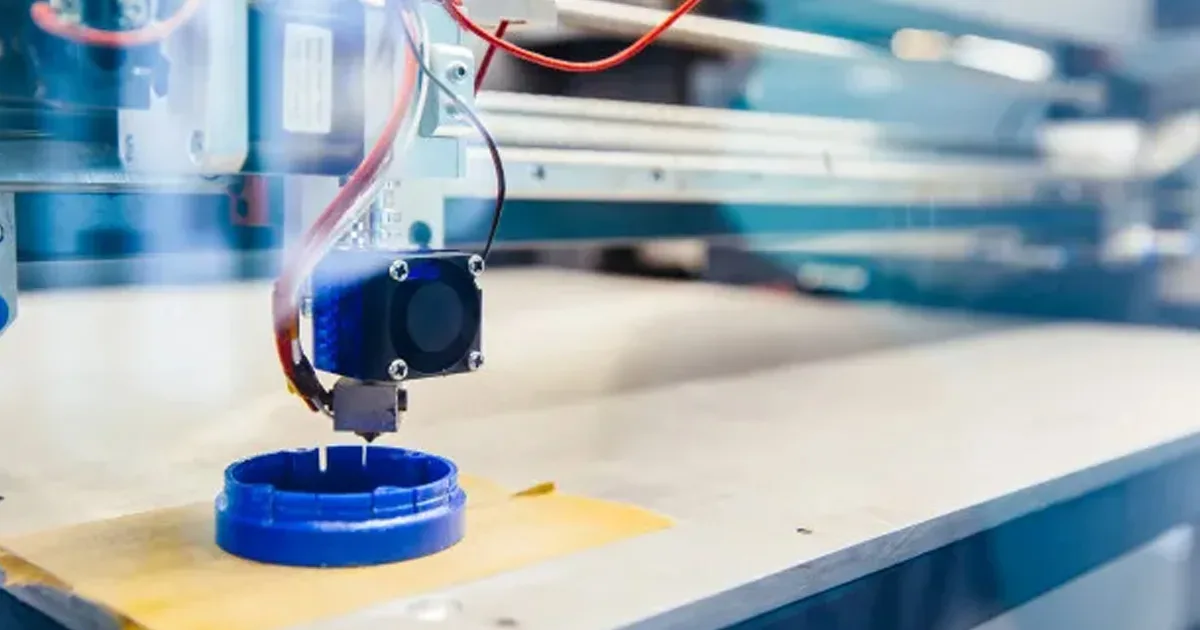
- 3D scanning and 3D printing. Repeatable geometry in profile capture and in monitoring builds in additive manufacturing.
- Food inspection. Size and shape grading of products whose height and position vary on the line.
- Laser scanning. Optical setups where the beam or imaging path must stay parallel to the axis across the working field.
The lenses are designed for the visible band. They pair with area scan and line scan cameras, bandpass filters and machine vision lighting to form a complete imaging path.
Choosing the right lens
Selection usually comes down to a few linked decisions. First, set the field of view your sensor needs to cover, which determines magnification. Next, check the working distance your fixture or enclosure allows. Then choose between object-side and bi-telecentric performance based on how tightly you need to control measurement error. Keep in mind that the front optic of an object-side telecentric lens must be at least as large as the field you want to image. Mechanical envelope is therefore part of the decision.
The full catalogue, including F/#, magnification, format, mount and working distance for each part, is listed in the specification table on this page. If no standard part fits your geometry, the lenses can be customized. Send your requirements through the RFQ form.
Why buy through Wavelength Optics USA
Wavelength Optics is the US arm of Wavelength Opto-Electronic, a Singapore precision optics manufacturer. Buying through the US entity gives you local support during your working hours and fast quoting on catalogue and custom parts. You also get technical consultation from people who can help you choose a telecentric type, magnification and working distance for your camera and fixture. If you’re specifying optics for a new inspection cell or replacing a lens that no longer meets your tolerance budget, contact us with your sensor, field of view and working distance, and we’ll recommend options.
Need Help Choosing the Right Model?
Our photonics specialists can help you select the optimal configuration for your system. Custom specifications available on request.