Polarization Optics
Glan-Type Polarizers: Thompson, Taylor and Laser Designs
Glan-type polarizers in Thompson, Taylor and Laser designs using calcite, α-BBO or YVO4 for high extinction from UV to IR. Quote with Wavelength Optics USA.
Polarizer designs for low, medium and high power
Birefringent crystal options
Damage threshold
Scratch-dig surface quality
Full catalogue
0 matching parts
| Part Number▲ | Wavelength (nm)▲ | Material▲ | Clear Aperture (mm)▲ | Diameter (mm)▲ | Type▲ |
|---|
No parts match these filters. .
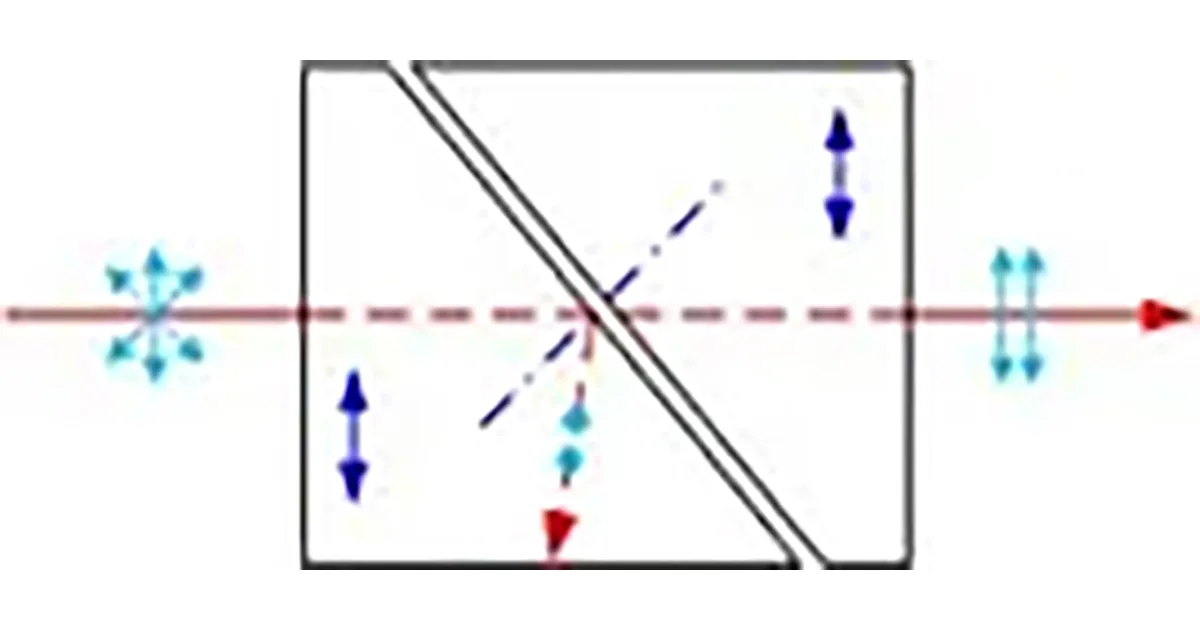
Glan-type polarizers use a birefringent crystal to separate an incoming beam into its ordinary and extraordinary components, transmitting only the extraordinary ray as linearly polarized output. Wavelength Opto-Electronic builds them in three designs (Glan-Thompson, Glan-Taylor and Glan-Laser) from calcite, yttrium orthovanadate (YVO4) or alpha barium borate (α-BBO). You would specify a Glan-type polarizer when a thin-film or dichroic polarizer can’t deliver the extinction ratio, polarization purity or spectral coverage your system needs. This applies whether you’re cleaning up the polarization of a fiber laser before a scan head or adding contrast to a SWIR inspection camera.
Choosing a design: Thompson, Taylor or Laser
The three designs are matched to the optical power they have to handle.
- Glan-Thompson is intended for low-power applications. It suits instrumentation, metrology and imaging setups where polarization purity matters more than power handling.
- Glan-Taylor covers medium-power use. It is a common choice for CW and modest pulsed sources in scanning and inspection systems.
- Glan-Laser is designed for high-power applications such as industrial and medical laser sources, where the polarizer sits directly in the working beam.
Each design is offered in either an air-spaced or a cemented configuration. The choice of interface affects power handling, acceptance angle and spectral behavior. Tell us your source and beam geometry, and we’ll help you weigh the trade-offs.
Crystal selection and spectral coverage
The crystal sets the usable wavelength range and influences extinction performance.
- Calcite is the traditional Glan-type material. It covers the visible through the near-infrared and is a solid general-purpose choice.
- α-BBO reaches the furthest into the ultraviolet of the three materials. Choose it for UV laser lines and UV inspection work.
- YVO4 extends the furthest into the infrared. Choose it for mid-wave and SWIR applications that are beyond calcite’s range.
All three materials give the high extinction ratios that Glan-type designs are known for, with YVO4 and α-BBO specified at a higher extinction level than calcite. Exact wavelength ranges, extinction ratio, angular field, clear aperture and damage threshold for each part are listed in the specification table on this page.
The standard format is a round polarizer with a choice of clear apertures. Custom configurations are available on request if your optical path needs something outside the catalogue range.
Where Glan-type polarizers are used
These polarizers appear across laser processing, machine vision and medical equipment:
- Laser drilling and laser engraving: controlling polarization state for consistent material interaction and edge quality.
- Laser scanning, 3D dynamic scanning and 3D printing: maintaining a defined polarization through galvo and focusing optics.
- Medical laser treatment: conditioning the output of therapeutic and aesthetic laser sources.
- Silicon wafer inspection: polarization-based contrast for detecting surface and subsurface defects in semiconductor process control.
- Food inspection: suppressing glare and specular reflection on inline machine vision systems.
- SWIR imaging: high-contrast differentiation of materials that look identical in the visible. YVO4 is particularly relevant here.
Why specify through Wavelength Optics USA
Wavelength Optics is the US arm of Wavelength Opto-Electronic, so you work directly with the manufacturer’s team in your own time zone.
- Technical consultation on selection. Choosing between Thompson, Taylor and Laser designs, air-spaced or cemented contact, and calcite, α-BBO or YVO4 depends on your wavelength, power and beam geometry. Our engineers can review your requirements and recommend a configuration before you commit.
- Fast quoting. Send a part number from the table below, or describe your application, and we’ll come back with a quote.
- Local support. You get questions answered, documentation supplied and custom requests coordinated through a US contact instead of across time zones.
Use the specification table to filter the catalogue by wavelength, material, clear aperture and type. If no standard part fits, contact Wavelength Optics USA to discuss a
Need Help Choosing the Right Model?
Our photonics specialists can help you select the optimal configuration for your system. Custom specifications available on request.