Medical Device Optics
Medical Optics: Components for Laser and Imaging Devices
Optical components for medical laser and imaging devices: beam expanders, DOEs, focusing lenses and endoscope lenses. Talk to Wavelength Optics USA today.
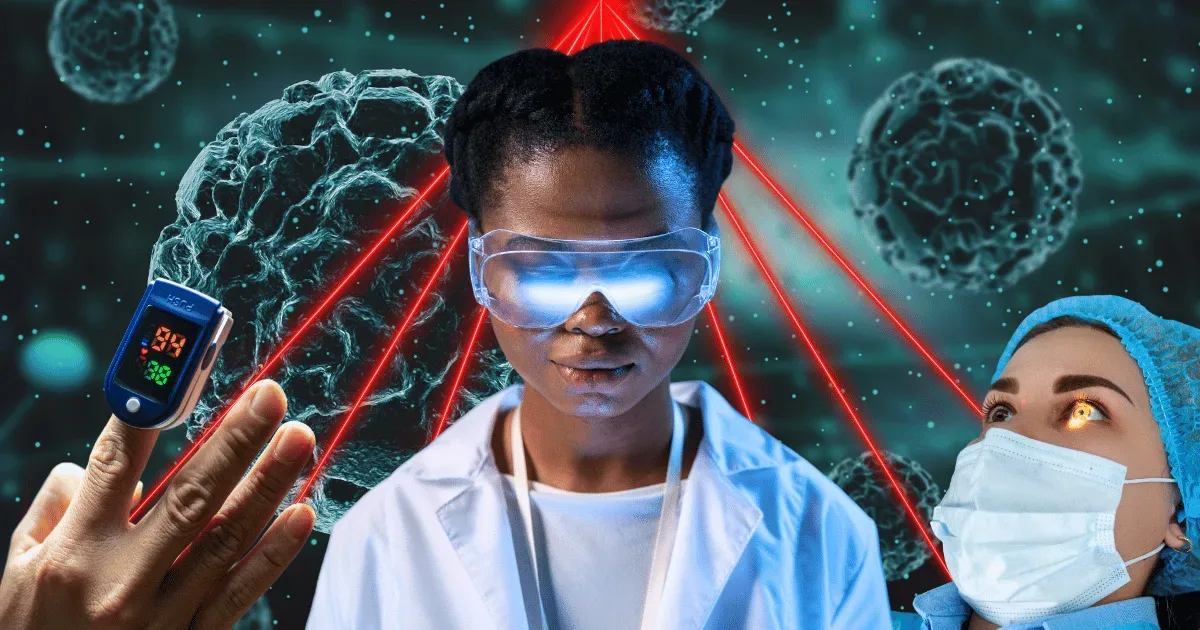
Optics for both medical device classes
Beam expanders, DOEs and beam shapers
Used in FLACS and wavefront-guided LASIK
Plus microscopy and OCT imaging paths
Medical devices that diagnose, treat or monitor patients increasingly depend on light. Surgical and aesthetic lasers need to deliver energy to a controlled spot with minimal damage to surrounding tissue. Imaging instruments need to resolve internal structures through narrow, flexible paths. Whether you’re designing an ophthalmic laser platform, a dermatology system or a handheld endoscope, the optical train determines how accurately the device does its job. Wavelength Opto-Electronic supplies optical components for both sides of this field: laser beam delivery and medical imaging.
Optics for Medical Laser Systems
In surgical and therapeutic lasers, the optics control spot size, intensity and energy distribution at the tissue. Typical building blocks include:
- Beam expanders and focusing lenses set the spot size and intensity delivered to the target.
- Diffractive optical elements (DOEs) and beam shapers reshape the beam profile so energy lands uniformly across the treatment area.
- Adaptive optics, using deformable mirrors or liquid crystal devices, correct aberrations in real time so the beam stays focused on the intended tissue.
These components show up in several established procedures:
- Femtosecond laser-assisted cataract surgery (FLACS). Beam shapers adjust the spot size and intensity of the femtosecond laser so energy is distributed evenly during lens fragmentation and anterior capsulotomy. Adaptive optics compensate for irregularities in corneal curvature or lens shape. OCT is often integrated to image the lens and anterior segment during the procedure.
- Wavefront-guided LASIK. A wavefront sensor maps lower- and higher-order aberrations of the eye. The excimer laser’s beam-shaping optics then deliver a consistent energy distribution across the corneal surface to match the treatment plan.
- Laser skin resurfacing and dermatological treatment. Beam shaping and focusing optics control how energy is applied across the skin surface.
If you’re building or upgrading one of these systems, the beam delivery optics are where much of the treatment accuracy is set.
Optics for Medical Imaging Equipment
Medical imaging uses light to visualize structures inside the body, often through instruments that must stay small and maneuverable. Relevant devices include microscopes, endoscopes, hysteroscopes, arthroscopes and rhinolaryngoscopes. Techniques such as confocal microscopy, optical coherence tomography (OCT) and endomicroscopy provide real-time imaging down to the cellular level.
Key optical components in these instruments include:
- Endoscope lenses, which form the image at the distal tip of the scope.
- Gradient-index (GRIN) lenses, which help deliver and focus light in compact assemblies.
- Fiber optics, which carry light efficiently through compact and handheld devices.
- Adaptive optics, which correct aberrations caused by tissue irregularities and preserve image clarity.
For imaging designs, the trade-offs usually involve packaging, light throughput and image quality. These need to be balanced early in the optical design.
Why Specify Through Wavelength Optics USA
Wavelength Optics is the US arm of Wavelength Opto-Electronic, a Singapore precision-optics manufacturer. Working through the US entity gives you:
- Local support in your time zone, with a team that understands US engineering and procurement workflows.
- Fast quoting for standard components and custom requirements, so you can move from concept to prototype without long back-and-forth.
- Technical consultation on selection. Medical optics often requires matching beam shapers, DOEs, lenses or imaging optics to a specific laser source, wavelength or instrument geometry. Our engineers can review your requirements and recommend a suitable configuration.
There is no fixed catalogue listing for this family, because most medical optics projects are defined by the device they go into. Send us your application details, such as the procedure or imaging modality, the laser or light source, and your mechanical constraints. We’ll work with you
Need Help Choosing the Right Model?
Our photonics specialists can help you select the optimal configuration for your system. Custom specifications available on request.