Opto-mechanics
Beam Splitters: Non-Polarizing Cube, Plate and ZnSe for CO2
Non-polarizing cube and plate beam splitters in N-BK7 and fused silica, plus ZnSe beam splitters for CO2 lasers. Request a quote from Wavelength Optics USA.
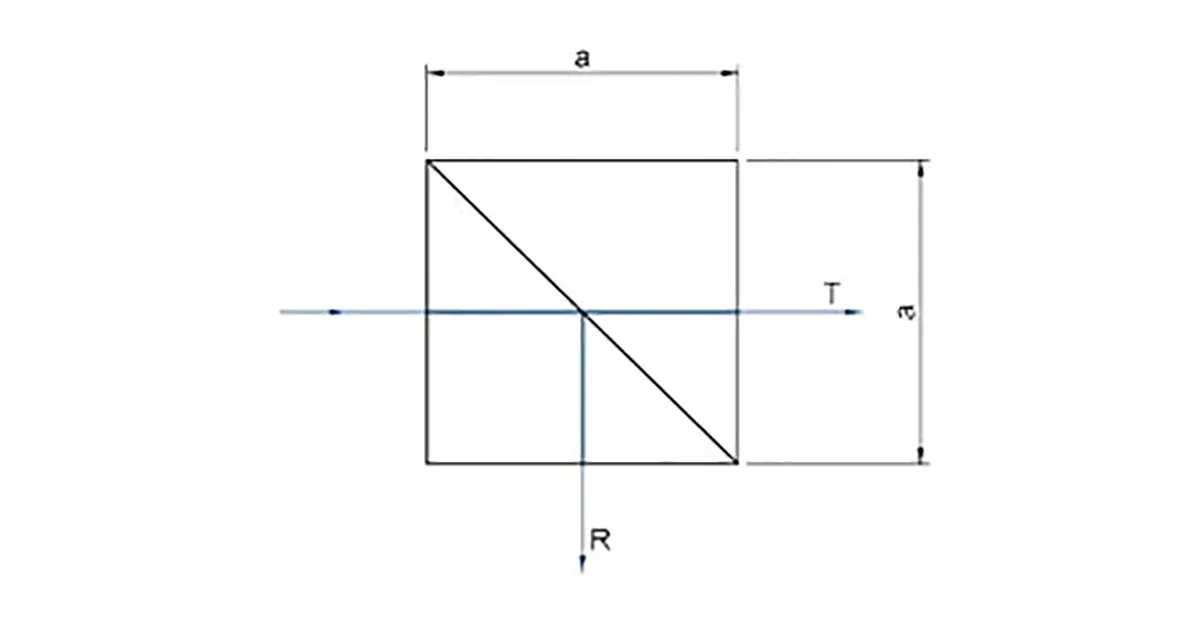
Split ratio, non-polarizing cube (BSCN)
Design angle of incidence
ZnSe beam splitter wavelengths for CO2 lasers
Coatings, sizes and split ratios on request
Full catalogue
0 matching parts
| Part Number▲ | Wavelength (nm)▲ | Material▲ | Dimension (mm)▲ | Thickness (mm)▲ | AOI▲ | Reflectivity▲ |
|---|
No parts match these filters. .
A beam splitter divides one incoming beam into two separate beams by reflecting part of the light and transmitting the rest. Wavelength Opto-Electronic designs and manufactures three beam splitter families. The first is non-polarizing cube beam splitters in N-BK7. The second is non-polarizing plate beam splitters in fused silica or N-BK7. The third is ZnSe beam splitters at 9.4µm and 10.6µm for CO2 laser systems. Each family comes in a range of wavelength bands from ultraviolet through near-infrared, so you can match the coating to your source. The full specification table below lists every catalogue part.
How the three families differ
In a beam splitter, the substrate, geometry and coating design together set its behaviour. For a non-polarizing design, the coating sets the power ratio between the two output beams, and both beams keep a similar polarization state.
Non-polarizing cube beam splitters (BSCN) carry the beamsplitter coating on the hypotenuse face. Every entrance face has an AR coating. The cubes provide a 50:50 split ratio regardless of input polarization. Because the reflecting surface sits inside the cube, the two output beams leave from perpendicular faces. This makes cubes easy to mount and align in compact layouts.
Non-polarizing plate beam splitters (BSPN) have the beamsplitter coating on one side and an AR coating on the other. The coating is designed for a 45° angle of incidence. You can choose fused silica or N-BK7 substrates. The published damage threshold for the plates is higher than for the cubes. For higher-fluence pulsed beams, a plate is usually the better starting point. Expect the usual displacement of the transmitted beam through the plate thickness.
ZnSe beam splitters (BSZ) are built for CO2 lasers at 9.4µm and 10.6µm. At a 45° incident angle, s and p polarization transmit and reflect very differently. The ZnSe beam splitters are designed specifically for that angle. Tell us the polarization state of your laser when you request a quote so the coating suits your beam.
Where they are used
- Laser drilling, engraving and scribing. Pick off part of a CO2 or solid-state beam for power monitoring, or split it to feed parallel heads. Uses include solar panel scribing and grooving lines.
- Laser beam alignment and profiling. Send a sample of the beam to a camera or profiler while the main beam continues to the work.
- Fluorescence microscopy. Combine or separate illumination and detection paths in visible-band instruments.
- Laser scanning, 3D dynamic scanning and 3D printing. Divide or recombine beams ahead of galvo and scan optics.
- Medical laser treatment. Monitor and route beams in therapeutic and aesthetic laser systems.
Whether you’re aligning a fiber laser on a machine-vision rig or building a CO2 beam delivery path, choose the family by wavelength band, beam geometry, power level and how much space you have.
Customization
The catalogue covers standard dimensions, thicknesses and wavelength bands. Wavelength Opto-Electronic can also build beam splitters to your specification. Options include non-standard split ratios, other angles of incidence, different substrate sizes or thicknesses, and coatings for other wavelength bands. Send your requirements through the RFQ form and we will review them with the engineering team in Singapore.
Why buy through Wavelength Optics USA
Wavelength Optics is the US arm of Wavelength Opto-Electronic. Working with us gives you a local point of contact for quotes, order questions and after-sales support, in your time zone. Our team can help you choose between cube, plate and ZnSe designs, read damage threshold and tolerance data against your laser parameters, and decide whether a catalogue part will work or a custom coating is needed. Send us your wavelength, beam size, power and mounting constraints, and we will come back with a recommendation and a quote.
Need Help Choosing the Right Model?
Our photonics specialists can help you select the optimal configuration for your system. Custom specifications available on request.